Tuesday, December 9, 2014

Tuesday, December 2, 2014


Saturday, August 30, 2014
VISUAL ANTHROPOLOGICAL REMNANTS or, “Signs of Life”
ASSIGNMENT No 2
This assignment is worth 30% of the total marks for this subject.
Currently we are covering the mechanical controls involved in making a
photograph. Soon you will know something about how the camera “sees” and
records our perceptions, and that 3 dimensional space must be compressed
into a 2 dimensional plane, and viewpoint and perspective will influence this
spatial organisation. To make a complete photograph though, we need to
harness the conceptual controls that can assist us in turning our ideas into
creative photo-images, thus this assignment seeks to combine technique with
creative expression.
The Conceptual
This is the important bit. It is the reason why we learn all that technical stuff.
It is about expressing our ideas, about giving our images meaning, about
giving the viewer something with substance to look at. It is here that we
consider our purpose in creating an image, and utilise the principles and
elements of composition to achieve that purpose.
Your assignment, or purpose, is to make photographs of scenes that attest to
human intervention, and to interpret this intervention by illustrating the
remnants. That is, do not document the activity itself, but a residue of that
activity. It is up to you what subjects and/or environments you choose to
record, as long as your photographs:
contrived, artificial or natural, shot on location or out of context. It could be
anything from skywriting to a clipped poodle. Try to exercise a fresh visual
approach and avoid clichés. For example, subjects like pollution visualised by
means of rubbish by the side of the road have been well documented, and
cemeteries have been “done to death” also.
Addressing this theme, submit four (4) “straight” (ie un-manipulated)
photographs.
This assignment is worth 30% of the total marks for this subject.
Currently we are covering the mechanical controls involved in making a
photograph. Soon you will know something about how the camera “sees” and
records our perceptions, and that 3 dimensional space must be compressed
into a 2 dimensional plane, and viewpoint and perspective will influence this
spatial organisation. To make a complete photograph though, we need to
harness the conceptual controls that can assist us in turning our ideas into
creative photo-images, thus this assignment seeks to combine technique with
creative expression.
The Conceptual
This is the important bit. It is the reason why we learn all that technical stuff.
It is about expressing our ideas, about giving our images meaning, about
giving the viewer something with substance to look at. It is here that we
consider our purpose in creating an image, and utilise the principles and
elements of composition to achieve that purpose.
Your assignment, or purpose, is to make photographs of scenes that attest to
human intervention, and to interpret this intervention by illustrating the
remnants. That is, do not document the activity itself, but a residue of that
activity. It is up to you what subjects and/or environments you choose to
record, as long as your photographs:
- appear to substantiate that the subject and/or environment has been physically influenced by human presence, and
- utilise aesthetic and photographic skills to draw attention to this evidence.
contrived, artificial or natural, shot on location or out of context. It could be
anything from skywriting to a clipped poodle. Try to exercise a fresh visual
approach and avoid clichés. For example, subjects like pollution visualised by
means of rubbish by the side of the road have been well documented, and
cemeteries have been “done to death” also.
Addressing this theme, submit four (4) “straight” (ie un-manipulated)
photographs.
 |
| Courtesy of the NSW State Library - Bathurst Gasworks circa 1963 |
 |
| August 2014 |
 |
| August 2014 |
 |
| August 2014 |
 |
| August 2014 |
Sunday, August 17, 2014
Robin Williams Tribute
The speech is from the 1996 blockbuster Jack.
"Please, don't worry so much, because in the end, none of us have very long on this Earth.
"Life is fleeting. And if you're ever distressed, cast your eyes to the summer sky, when the stars are strung across the velvety night. And when a shooting star streaks through the blackness turning night into day, make a wish, think of me. Make your life spectacular. I know I did."
Friday, August 8, 2014
Art Nouveau/Arts and crafts
Assessment One - Book Covers
This project is devised for you to engage with image and text to create an Illustrator document using a vectored image to design a book cover B5 (250 x 176mm). Use a downloaded image from the list of designers and convert it to vectors. Manipulate this as you need fit while adding the title text “Dreams of (designer/artist’s full name)” and your name as the author. Create three quite different designs of the book cover.


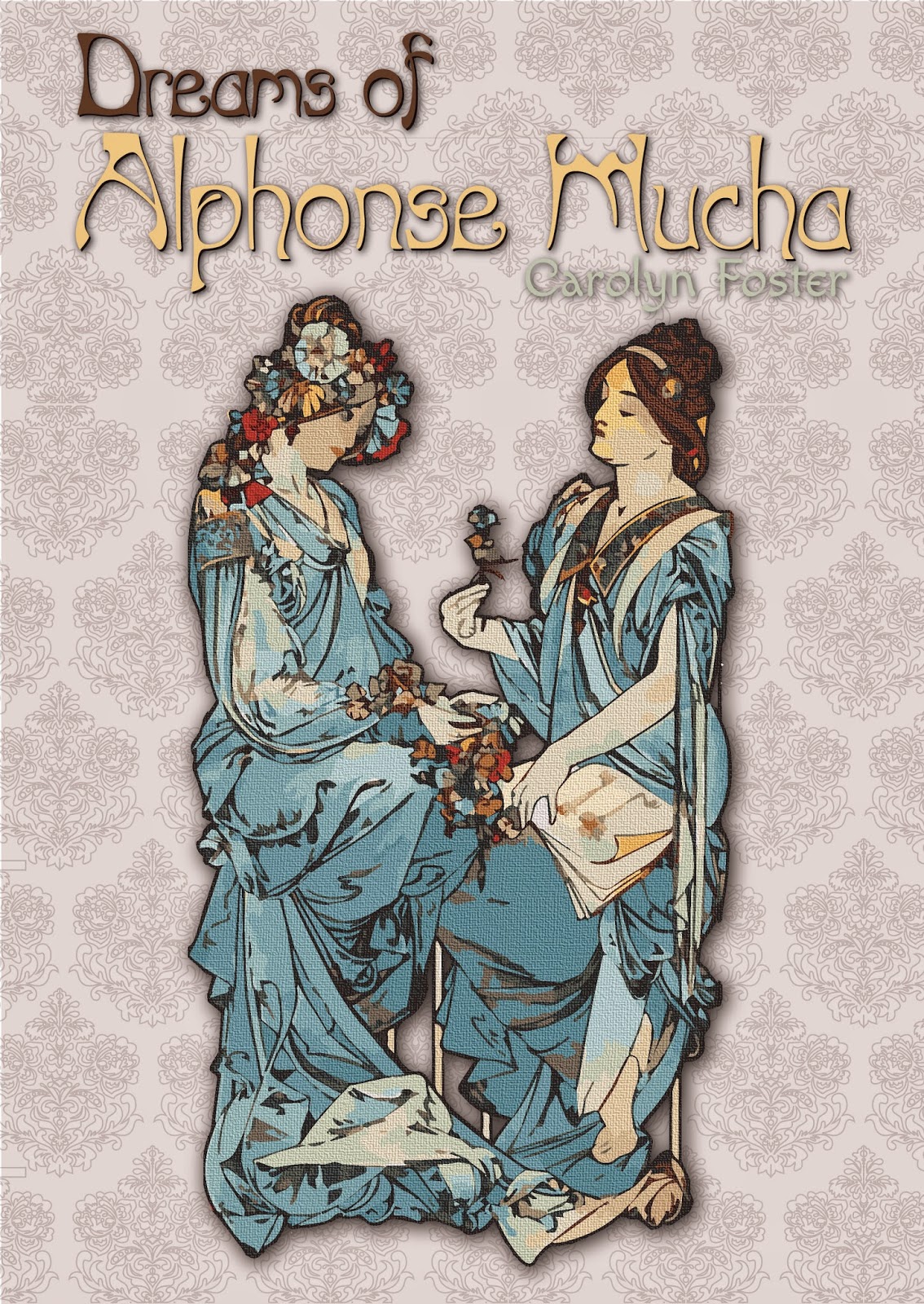
This project is devised for you to engage with image and text to create an Illustrator document using a vectored image to design a book cover B5 (250 x 176mm). Use a downloaded image from the list of designers and convert it to vectors. Manipulate this as you need fit while adding the title text “Dreams of (designer/artist’s full name)” and your name as the author. Create three quite different designs of the book cover.
Demonstrating functions of the Camera
Assessment item 1
Task
The aim of this assessment is for you to become familiar with the mechanical controls you have over the making of a photograph. It is essential that you document your exposure details (aperture, shutter speed, lighting conditions) at the time of shooting. This will be integral in evaluating the results of your photographs.
You are asked to photograph the following:-
Part A)
Two images (2) clearly illustrating Depth of Field of the exact same scene
i) Maximum Depth of Field - aperture setting at your camera’s smallest aperture, eg preferably f16 or smaller
ii) Minimum Depth of Field - aperture setting at your camera’s largest aperture, eg preferably f4 or larger
Hint: It will assist in your execution of this task to place objects within your scene at different distances from the camera – making sure that you focus on the same area within your scene with the two different aperture. You should see a change in the sharpness of these objects from f16 to f4. You will notice that with the change of the aperture there will be a change in the amount of light coming through the camera. To ensure correct exposure you will need to make changes to shutter speed.
Part B)
Three (3) images illustrating different shutter speeds of the same moving subject eg cars, bikes, skate-boards etc
i) Slow shutter speed. eg 30th of a second or slower - to show movement as a blur.
ii) Fast shutter speed. eg 1000th of a second or slower – to freeze motion.
iii) Panning – slow shutter speed with the camera flowing the moving subject.
 |
| Maximum Depth of Field |
 |
| Minimum Depth of Field |
 |
| Panning |
 |
| Fast Shutter Speed |
 |
| Slow Shutter Speed |
Monday, June 16, 2014
Assessment Two Task VPA104 Surrealism (Colour)
Task
You are required to create three (3) colour (RGB) images that make maximum use of a canvas 1600 pixels x 1200 pixels in either landscape or portrait format.
For this assignment, you can use your own photographs or you can use other photographs sourced from the Internet or books. The images you use must be photographs. They cannot be photos of paintings, etchings etc. You must use a minimum of FOUR different elements from different photos for each image you create.
The aim is to work in a surreal style. Your images have to be optically correct but present a photographic impossibility with an emphasis on the imaginary. Do not use Photoshop filters/effects to the images, instead rely on the intrinsic quality of the images themselves to convey the surrealist theme.
This task is not about your fantasy but more concerned with surrealism and therefore the Unconscious. So avoid subjects like fairies and gothic images that are highly constructed and stylized by a fashion and current trends. Also the term surreal is used very loosely and incorrectly these days and thrown
about to describe otherwise ordinary and possible scenarios. As an example, it is not a surreal situation to have a subject dressed up in an obvious costume or mask etc, or to have any scenario that could be easily staged/set-up.
What you submit for Assessment 3 includes:
In this assignment, you will be able to expand and explore your skills in digital photographic imaging using your own or appropriated images to think in the surrealist mode. You can download good quality images from the internet and/or incorporate elements from photos you have taken yourself using a
DSLR camera.
You are required to create three (3) colour (RGB) images that make maximum use of a canvas 1600 pixels x 1200 pixels in either landscape or portrait format.
For this assignment, you can use your own photographs or you can use other photographs sourced from the Internet or books. The images you use must be photographs. They cannot be photos of paintings, etchings etc. You must use a minimum of FOUR different elements from different photos for each image you create.
The aim is to work in a surreal style. Your images have to be optically correct but present a photographic impossibility with an emphasis on the imaginary. Do not use Photoshop filters/effects to the images, instead rely on the intrinsic quality of the images themselves to convey the surrealist theme.
This task is not about your fantasy but more concerned with surrealism and therefore the Unconscious. So avoid subjects like fairies and gothic images that are highly constructed and stylized by a fashion and current trends. Also the term surreal is used very loosely and incorrectly these days and thrown
about to describe otherwise ordinary and possible scenarios. As an example, it is not a surreal situation to have a subject dressed up in an obvious costume or mask etc, or to have any scenario that could be easily staged/set-up.
What you submit for Assessment 3 includes:
- Three images to the specified requirements above and SAVED AS highest quality .JPEGS. (Choose File > Save As).
- A brief description or title for each image with mention of those photographers/artists whose work has inspired your own (around 50 - 100 words per image).
- Include thumbnails as well as correct details and links to all the original sourced images.
- Also as in previous occasions include details of your Photoshop techniques as well.
- All images to be used in this subject are to be Photographs.
- No use of filters/special 'effects' in Photoshop (or other image manipulation software).
In this assignment, you will be able to expand and explore your skills in digital photographic imaging using your own or appropriated images to think in the surrealist mode. You can download good quality images from the internet and/or incorporate elements from photos you have taken yourself using a
DSLR camera.
 |
| Waterfall |
 |
| Voyage of the Dawn Treader |
 |
| Kansas |
Subscribe to:
Posts (Atom)