Saturday, April 25, 2015

Thursday, April 23, 2015
Homage to Annie Leibovitz
Annie Leibovitz
Homage
by Carolyn Foster
“When
I take a picture I take 10 percent of what I see.”
–
Annie Leibovitz
Photographer
Annie Leibovitz was born October 2, 1949, in Waterbury, Connecticut.
Considered one of America's best portrait
photographers, Annie,
developed her
trademark use of bold colours and poses while at Rolling Stone.
In
1983, Leibovitz left Rolling Stone and began working for the entertainment
magazine Vanity Fair. With a wider array of subjects, Leibovitz’s photographs
for Vanity Fair ranged from presidents to literary icons to teen heartthrobs.
During the late 1980s, Leibovitz started
to work on a number of high-profile advertising campaigns. The most notable was
the American Express “Membership” campaign, which featured portraits of
celebrity cardholders, like Elmore Leonard, Tom Selleck, and
Luciano Pavarotti.
Her most famous photographs are of
famously rich people, but she is a chicken-soup kind of woman who gets nervous
when she’s on the other end of the lens.
The
Pilgrimage
One
of the main influences in Leibovitz’s life was Susan Sontag. They were partners for fifteen years until
Sontag’s death in 2004.
“The
Beauty Book” was the original title for Leibovitz’s pilgrimage work. It was a project dreamed up by the couple as,
in Leibovitz’s words, “an excuse for us to travel around to places we cared
about and wanted to see.”
Annie
hit a rough patch in her life by 2009.
She had lost long-time lover Susan Sontag, as well as her father, and
was in the midst of a public financial crisis that put the rights to all of her
photographs up for collateral in exchange for $15.5 million.
So
in the midst of financial turmoil, the renowned celebrity photographer needed a
way to refuel. Her
solution: a bucket list of influential people and places to visit and
photograph. The
series, ‘Pilgrimage’, takes inspiration from her late companion, Susan Sontag.
My Pilgrimage
I
chose to do a pilgrimage on Ben Chifley, but really it ended up being a
pilgrimage about his wife.
Joseph
Benedict "Ben" Chifley was the 16th Prime Minister of Australia from
1945 to 1949. He was born in Bathurst,
grew up in Bathurst and was buried in Bathurst.
In
1912 he met his future wife
Elizabeth. Elizabeth's parents on the
occasion of her wedding present was tenancy (gifted in 1920) of a modest house
at 10 Busby Street, Bathurst of which the couple retained for the rest of their
lives.


Tuesday, December 9, 2014
Tuesday, December 2, 2014


Saturday, August 30, 2014
VISUAL ANTHROPOLOGICAL REMNANTS or, “Signs of Life”
ASSIGNMENT No 2
This assignment is worth 30% of the total marks for this subject.
Currently we are covering the mechanical controls involved in making a
photograph. Soon you will know something about how the camera “sees” and
records our perceptions, and that 3 dimensional space must be compressed
into a 2 dimensional plane, and viewpoint and perspective will influence this
spatial organisation. To make a complete photograph though, we need to
harness the conceptual controls that can assist us in turning our ideas into
creative photo-images, thus this assignment seeks to combine technique with
creative expression.
The Conceptual
This is the important bit. It is the reason why we learn all that technical stuff.
It is about expressing our ideas, about giving our images meaning, about
giving the viewer something with substance to look at. It is here that we
consider our purpose in creating an image, and utilise the principles and
elements of composition to achieve that purpose.
Your assignment, or purpose, is to make photographs of scenes that attest to
human intervention, and to interpret this intervention by illustrating the
remnants. That is, do not document the activity itself, but a residue of that
activity. It is up to you what subjects and/or environments you choose to
record, as long as your photographs:
contrived, artificial or natural, shot on location or out of context. It could be
anything from skywriting to a clipped poodle. Try to exercise a fresh visual
approach and avoid clichés. For example, subjects like pollution visualised by
means of rubbish by the side of the road have been well documented, and
cemeteries have been “done to death” also.
Addressing this theme, submit four (4) “straight” (ie un-manipulated)
photographs.
This assignment is worth 30% of the total marks for this subject.
Currently we are covering the mechanical controls involved in making a
photograph. Soon you will know something about how the camera “sees” and
records our perceptions, and that 3 dimensional space must be compressed
into a 2 dimensional plane, and viewpoint and perspective will influence this
spatial organisation. To make a complete photograph though, we need to
harness the conceptual controls that can assist us in turning our ideas into
creative photo-images, thus this assignment seeks to combine technique with
creative expression.
The Conceptual
This is the important bit. It is the reason why we learn all that technical stuff.
It is about expressing our ideas, about giving our images meaning, about
giving the viewer something with substance to look at. It is here that we
consider our purpose in creating an image, and utilise the principles and
elements of composition to achieve that purpose.
Your assignment, or purpose, is to make photographs of scenes that attest to
human intervention, and to interpret this intervention by illustrating the
remnants. That is, do not document the activity itself, but a residue of that
activity. It is up to you what subjects and/or environments you choose to
record, as long as your photographs:
- appear to substantiate that the subject and/or environment has been physically influenced by human presence, and
- utilise aesthetic and photographic skills to draw attention to this evidence.
contrived, artificial or natural, shot on location or out of context. It could be
anything from skywriting to a clipped poodle. Try to exercise a fresh visual
approach and avoid clichés. For example, subjects like pollution visualised by
means of rubbish by the side of the road have been well documented, and
cemeteries have been “done to death” also.
Addressing this theme, submit four (4) “straight” (ie un-manipulated)
photographs.
 |
| Courtesy of the NSW State Library - Bathurst Gasworks circa 1963 |
 |
| August 2014 |
 |
| August 2014 |
 |
| August 2014 |
 |
| August 2014 |
Sunday, August 17, 2014
Robin Williams Tribute
The speech is from the 1996 blockbuster Jack.
"Please, don't worry so much, because in the end, none of us have very long on this Earth.
"Life is fleeting. And if you're ever distressed, cast your eyes to the summer sky, when the stars are strung across the velvety night. And when a shooting star streaks through the blackness turning night into day, make a wish, think of me. Make your life spectacular. I know I did."
Friday, August 8, 2014
Art Nouveau/Arts and crafts
Assessment One - Book Covers
This project is devised for you to engage with image and text to create an Illustrator document using a vectored image to design a book cover B5 (250 x 176mm). Use a downloaded image from the list of designers and convert it to vectors. Manipulate this as you need fit while adding the title text “Dreams of (designer/artist’s full name)” and your name as the author. Create three quite different designs of the book cover.


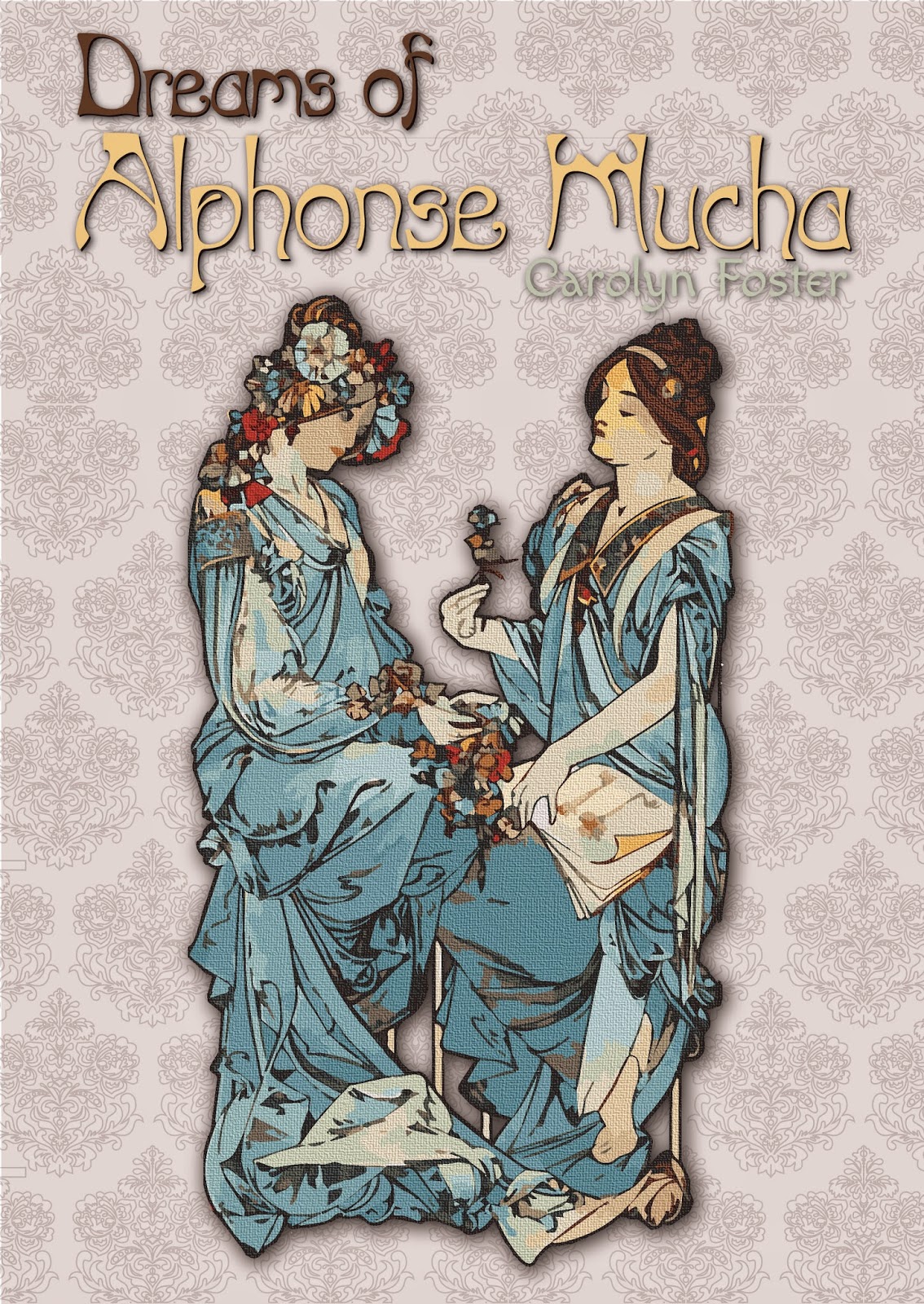
This project is devised for you to engage with image and text to create an Illustrator document using a vectored image to design a book cover B5 (250 x 176mm). Use a downloaded image from the list of designers and convert it to vectors. Manipulate this as you need fit while adding the title text “Dreams of (designer/artist’s full name)” and your name as the author. Create three quite different designs of the book cover.
Subscribe to:
Posts (Atom)